
Dry Run
A dry run is the first time the QuickBooks Web Connector logs in to the Ditat TMS and performs a sync. Once you click Update Selected in the Web Connector and it completes without error, the dry run is complete.
The dry run will:
-
Verify that user permissions are configured correctly and that the Web Connector can access the Ditat TMS.
-
Download the QuickBooks Items list and store it in the Ditat TMS.
-
Download the QuickBooks Accounts list and store it in the Ditat TMS.
Map items
Once the dry run is complete, you will need to map Ditat TMS payment types to QuickBooks items so data is exported correctly.
Important Notes:
-
Ditat TMS exports and maps Service Items only. Make sure these are set up in QuickBooks before mapping.
-
If you add or change items in QuickBooks, they will not be visible in the Ditat TMS until you run the Web Connector update again.
-
QuickBooks Essentials requires a dummy invoice and bill transaction to create the AR and AP accounts before mapping can be completed.
For frequently asked questions about sync warnings and errors, click
Steps to Map Items and Accounts
-
In the Ditat TMS, go to Rate & Pay → Accounting Company.
-
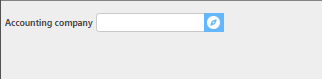
Edit the integrated company by selecting it from the search lookup.
-
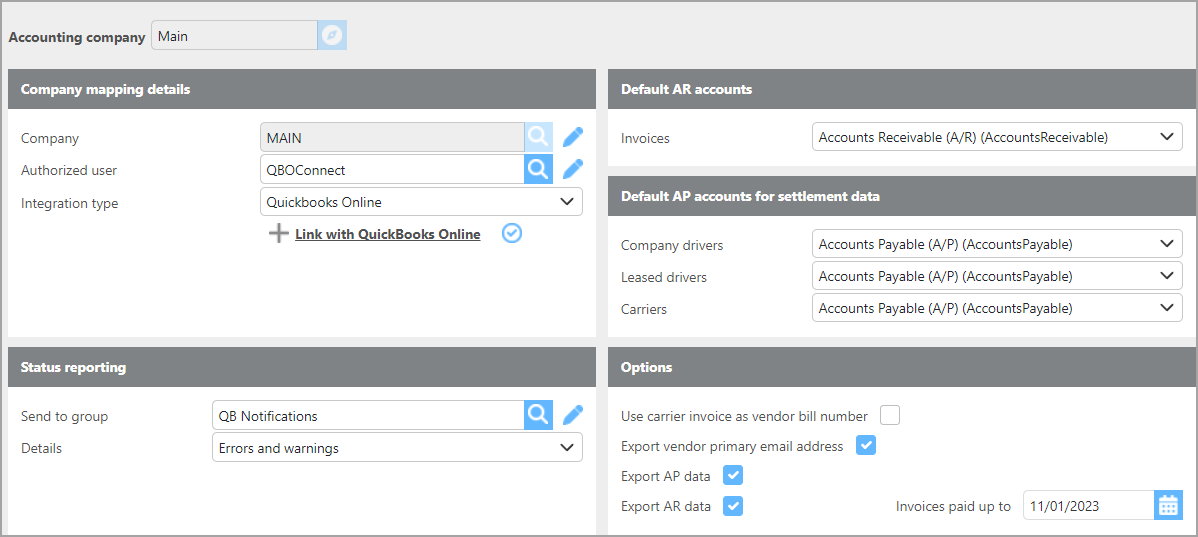
Select the Default AR/AP Accounts.
-
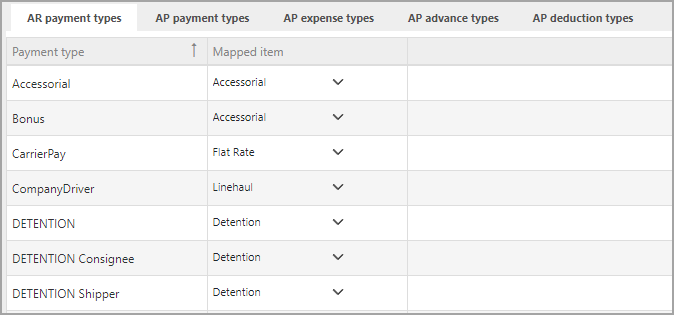
Select the AR Payment Types Mapping tab.

-
Map each Ditat payment type to the corresponding item imported from your QuickBooks account.
-
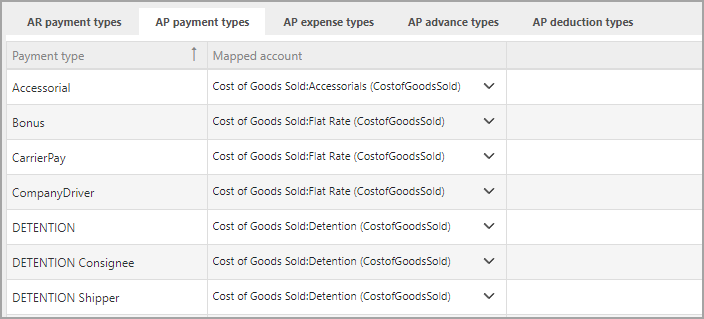
Repeat Steps 4–5 for the AP (Settlements) Mapping tab.
Map payment types to accounts
Use this section to map Ditat payment types to the appropriate QuickBooks accounts.
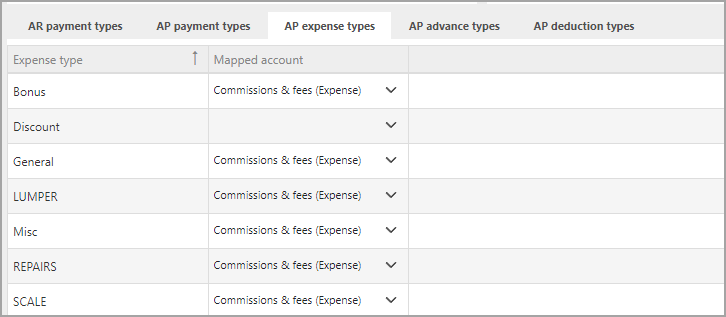
Map expense types to accounts
Use this section to map Ditat expense types to the appropriate QuickBooks accounts.
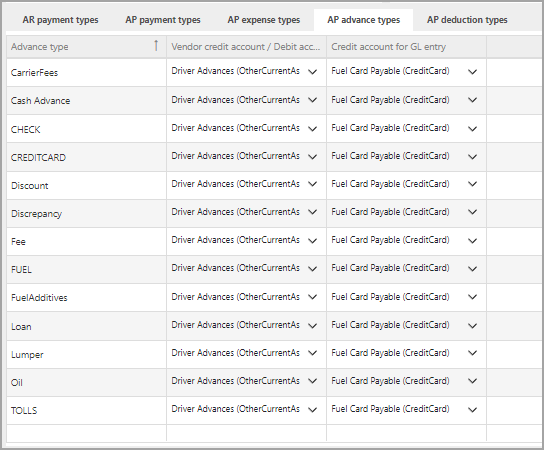
Map advance types to accounts
Advance mapping has two sides:
-
Left Column (Debit Account) – The account that is debited when an advance is posted, indicating that money was paid out. If the advance is later deducted from a trip, this same account will be credited.
-
Right Column (Credit Account) – The account that is credited when the advance is posted, indicating a liability for the transaction. This is typically a credit card or similar account, which is debited when you pay the provider.
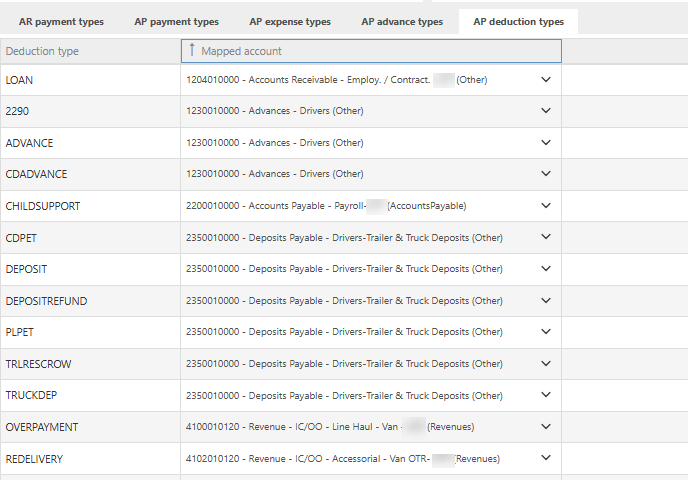
Map Deduction Types to Accounts
Use this section to map Ditat deduction types to the appropriate QuickBooks accounts.
The integration is now ready to export data between the Ditat TMS and QuickBooks!
Tip: To map new accounts to your accounting company after initial setup, see How to Map New Accounts to Your Accounting Company.